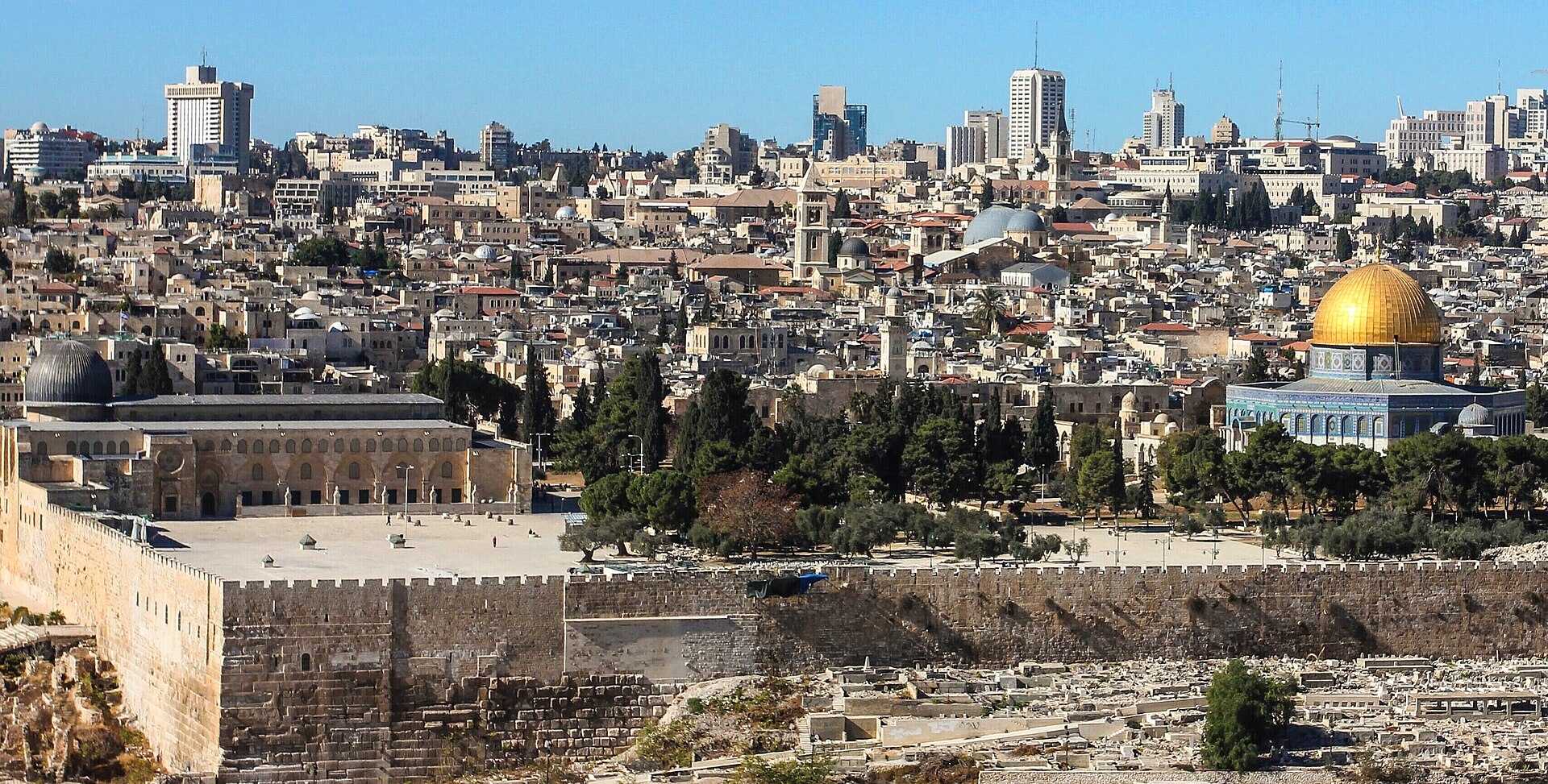

From the northern seas to the streets of Jerusalem
A stone standing in Sweden names Jerusalem. A Norwegian king crossed the Mediterranean and visited the Holy Sepulchre. Between those two stories lies a different way to explore the Old City: through travellers who arrived from far beyond its familiar historical horizons.
This special-interest private programme brings together Jerusalem’s sacred landscape, Scandinavian journeys and the questions historians ask of their sources. Begin with the city in view, step into its streets, then slow down at the church that connects the itinerary with Sigurd’s pilgrimage. The day suits curious travellers, history enthusiasts and families who enjoy asking how we know what happened.
Proposed format: an English-language guided visit for your own party, with the guide, date and route agreed individually. Allow approximately 5–6 hours from a Jerusalem starting point. Transport from Tel Aviv adds time.
What makes this programme different?
- One question connects the day: what brought Scandinavians to Jerusalem, and what evidence survives?
- Look at the source: compare a photograph of runestone U 136 with different translations, rather than relying on a dramatic retelling.
- Separate two periods: an eleventh-century memorial and Sigurd’s later journey in 1110 belong to different historical settings.
- Give the Holy Sepulchre time: use one principal interior to explore pilgrimage and layers of rebuilding, with pauses for questions.
Your proposed Jerusalem itinerary
1. The city in view: Mount of Olives
Start at an agreed public viewpoint on the Mount of Olives, subject to access on the day. Locate the Old City and discuss why Jerusalem drew travellers across languages and distances. A modern panorama introduces the setting; it is not evidence that a particular northern traveller stood at this exact spot.
2. Into the Old City: streets, gates and changing rulers
Transfer to an agreed accessible gate and continue on foot towards the Christian Quarter. Use the streets around the Muristan and the approach to the Holy Sepulchre to introduce medieval pilgrimage and the Crusader period. The walk provides context, without labelling today’s buildings as Viking remains or claiming to reconstruct Sigurd’s precise path.
3. The Holy Sepulchre: the documented connection
Make the Church of the Holy Sepulchre the main visit, allowing for worship and queues. Discuss Sigurd’s pilgrimage and how a sacred destination can remain recognisable while its buildings change. The Crusader rebuilding was dedicated in 1149, after his visit. Entry and the parts accessible to visitors must be confirmed; services, the tomb chamber and priority access are not included by implication.
4. The Swedish stone: a conversation over the evidence
At a suitable quiet stopping point, return to the photograph of U 136 and compare what its brief inscription says with what later storytellers might add. Was the journey a pilgrimage, and what does its wording actually establish? Finish with time for questions and an agreed departure point. A refreshment stop can be requested; food and drinks are arranged separately.
A remarkable story, with clear historical boundaries
Runestone U 136 dates to approximately 1020–1050 and connects Östen, or Eysteinn, with Jerusalem. Its interpretation varies: the Swedish heritage authority presents a pilgrimage, while other translations use different wording. The original stone remains in Sweden. On this Jerusalem programme, it is discussed through a credited photograph.
Sigurd I’s visit in 1110 is a later episode. Denys Pringle’s study records his pilgrimage to the Holy Sepulchre and the Jordan before the attack on Sidon. This proposed day stays in Jerusalem: the Jordan and Sidon are not stops. It does not claim a Viking colony, a Viking conquest of Jerusalem or a trail of excavated Viking monuments.
Read the full evidence and references in our related Israel Travel Guide article: Vikings in the Holy Land. It makes useful reading before the visit.
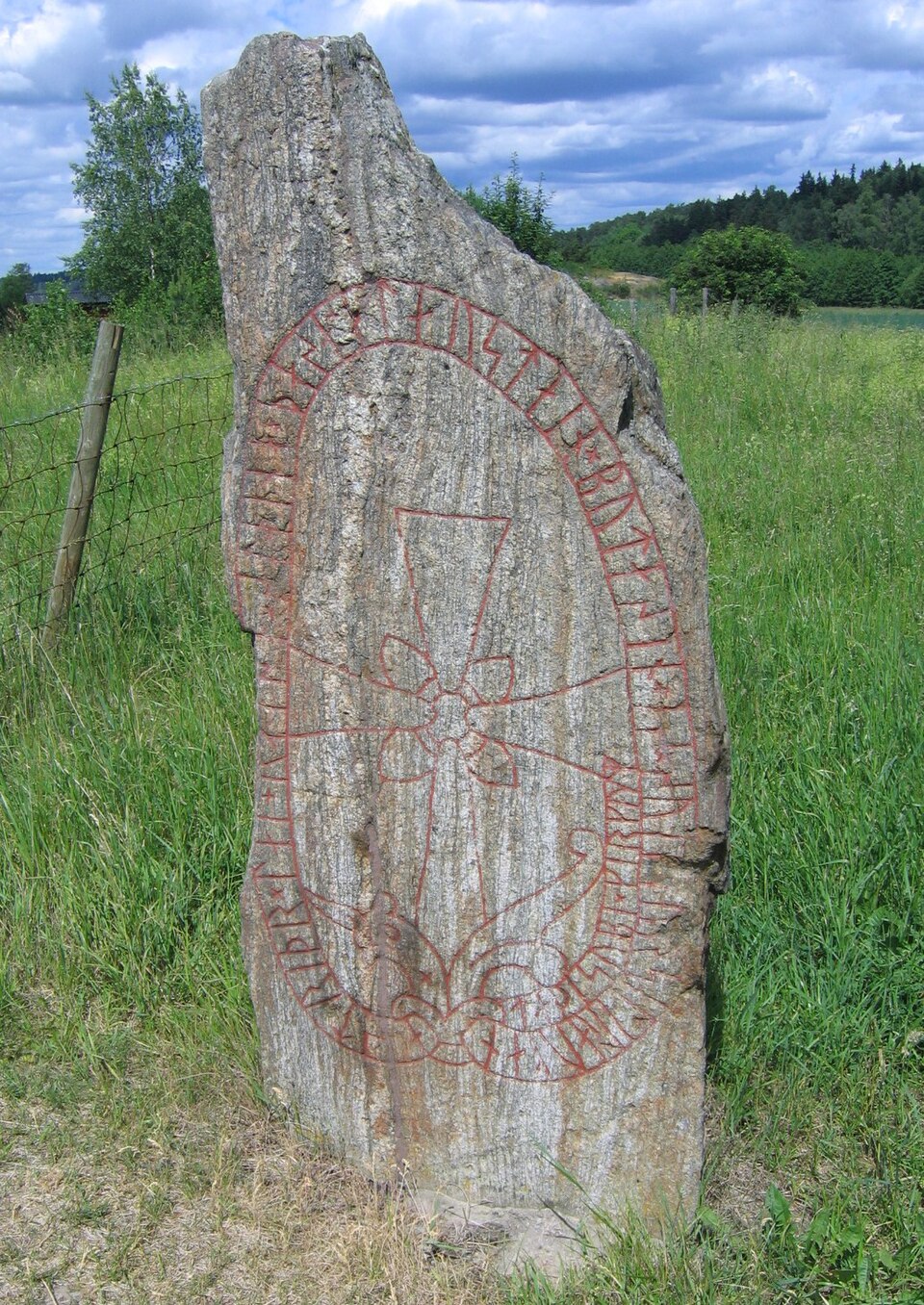
Runestone U 136, Broby bro, Sweden. An object to study through its photograph, not a physical stop on the tour.
Photo: I, Berig · CC BY 2.5 · Wikimedia Commons. Resized Wikimedia thumbnail; no retouching. Full credits.

Departures from Jerusalem and Tel Aviv
From Jerusalem
Request pickup at your accommodation or an agreed meeting point. The proposed 5–6 hours includes the local sequence of visits and agreed local transfers; the final timing depends on access, walking pace and queues. A vehicle is useful between the viewpoint and the Old City, but the historic lanes are explored on foot. Confirm the vehicle and driver arrangements in the proposal.
From Tel Aviv
Request a private transfer to Jerusalem and return, or an agreed one-way finish. Allow an indicative full day of around 8–10 hours, including intercity travel, with the exact plan confirmed for your address and date. Traffic or a longer church visit can change the schedule. The driver’s waiting time and the return pickup must be agreed explicitly.
Shape the day around your group
Walking: expect uneven paving, slopes and possible steps in the Old City. Tell us about mobility needs before booking so the precise route can be assessed. The Mount of Olives viewpoint can be omitted by agreement for a shorter programme centred on the Christian Quarter.
Families: ask for a shorter, question-led version built around reading the stone and comparing the skyline with the streets. Share children’s ages and attention spans; the discussion can focus on journeys and evidence rather than detailed warfare.
Religious interests: tell us whether you prefer historical interpretation, time for personal reflection or a particular Christian tradition. Attendance at a service requires separate arrangements. Dress respectfully and follow the church’s rules for photography and visiting.
Timing: this is a proposed itinerary, not a fixed departure. If a principal stop is unavailable, agree the revised programme before confirming. A conversation outside the church is not an automatic substitute for an interior visit you consider essential.
What your individual proposal should confirm
- The date, party size and an English-speaking licensed guide with suitable historical interests, subject to availability.
- The agreed stops, walking requirements, total duration and pickup and finish points.
- Whether a vehicle, driver, local transfers and intercity travel are included.
- Any admissions, waiting time, refreshments or other services that are included or payable separately.
- Child-seat requirements, access needs, cancellation terms and the arrangements if access changes.
Tell us in advance if children need seats so we can confirm suitable provision. Sending the form below prepares a WhatsApp enquiry; a reservation exists only after the arrangements are agreed.
Read before your visit
Explore a related historical theme
Tell us what you have in mind
Prepare an enquiry for Art Voyage. Review and send the message in WhatsApp.